Translating Children’s Literature into Arabic
This book offers an in-depth exploration of the development of the translation of children’s literature into Arabic, providing unique insights into the prominent role of Kāmīl Kīlānī in shaping its history as well as for the translation of children’s literature more broadly. The volume surveys existing scholarship on the translation of children’s literature, which encourages cross-cultural understanding and the promotion of reading in minority languages. In particular, Ayoub and Elimam call attention to translation by adaptation as the driving force in many most translations of children’s literature into Arabic and other languages in which cultural differences between source and target languages can prove challenging. The book reflects on Kīlānī’s importance to the translation of Arabic children’s literature as one of the first writers to specialize in adapting works for Arab children, charting his influence through the use of narrative theory and framing strategies in adaptations. A final chapter examines the limitations and opportunities of the study, building toward new research on adaptations as the primary route for translations of children’s literature both in Arabic and beyond. This book will be of interest to scholars in translation studies, adaptation studies, Arabic literature, and children’s literature.
Select Location
Select Condition
Select Location Type
From $63.18
Original: $210.59
-70%Translating Children’s Literature into Arabic—
$210.59
$63.18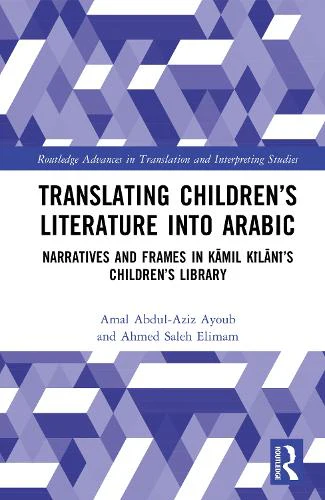
Description
This book offers an in-depth exploration of the development of the translation of children’s literature into Arabic, providing unique insights into the prominent role of Kāmīl Kīlānī in shaping its history as well as for the translation of children’s literature more broadly. The volume surveys existing scholarship on the translation of children’s literature, which encourages cross-cultural understanding and the promotion of reading in minority languages. In particular, Ayoub and Elimam call attention to translation by adaptation as the driving force in many most translations of children’s literature into Arabic and other languages in which cultural differences between source and target languages can prove challenging. The book reflects on Kīlānī’s importance to the translation of Arabic children’s literature as one of the first writers to specialize in adapting works for Arab children, charting his influence through the use of narrative theory and framing strategies in adaptations. A final chapter examines the limitations and opportunities of the study, building toward new research on adaptations as the primary route for translations of children’s literature both in Arabic and beyond. This book will be of interest to scholars in translation studies, adaptation studies, Arabic literature, and children’s literature.