Te Tiriti, Equality and the Future of New Zealand Democracy
In this major work, the leading Māori political scientist Dominic O’Sullivan draws on theories of republicanism and the commonwealth to challenge understandings of Te Tiriti as a partnership between races, or between Māori people and the Crown. O’Sullivan also critiques the idea that Te Tiriti created one people, assimilating Māori into colonial ways of governing. Instead, he proposes a new politics where Māori self-determination and liberal democracy, rangatiratanga and kāwanatanga, complement one another to promote meaningful and culturally grounded political equality. O’Sullivan enables us to see a future for Aotearoa in which political authority and responsibility belong to everyone and should therefore work equally well for all; a country where Māori people, as much as anyone else, bring their tikanga to public life; and a society where the Crown is no longer the word we use to describe government. For scholars, policymakers and political leaders, for Māori and Pākehā, for all of us imagining a respectful and inclusive future for our island democracy, this is essential reading.
Select Location
Select Condition
Select Location Type
From $11.67
Original: $38.89
-70%Te Tiriti, Equality and the Future of New Zealand Democracy—
$38.89
$11.67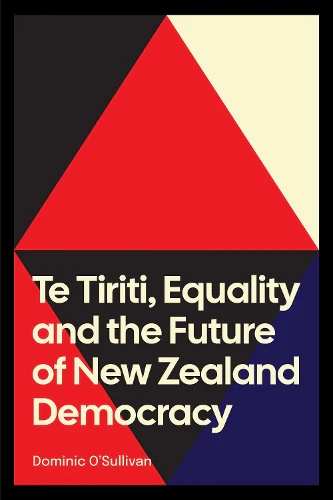
Description
In this major work, the leading Māori political scientist Dominic O’Sullivan draws on theories of republicanism and the commonwealth to challenge understandings of Te Tiriti as a partnership between races, or between Māori people and the Crown. O’Sullivan also critiques the idea that Te Tiriti created one people, assimilating Māori into colonial ways of governing. Instead, he proposes a new politics where Māori self-determination and liberal democracy, rangatiratanga and kāwanatanga, complement one another to promote meaningful and culturally grounded political equality. O’Sullivan enables us to see a future for Aotearoa in which political authority and responsibility belong to everyone and should therefore work equally well for all; a country where Māori people, as much as anyone else, bring their tikanga to public life; and a society where the Crown is no longer the word we use to describe government. For scholars, policymakers and political leaders, for Māori and Pākehā, for all of us imagining a respectful and inclusive future for our island democracy, this is essential reading.