Persian Language Book, Parviz Sabeti the SAVAK Deputy Interviewed by Erfan Ghanei Fard
The present book encompasses various legal phenomena pertaining to wealth transfer mortis causa in the world of Roman law. It demonstrates that succession in property rights could be realised by agreements of various kinds, which - though not building a coherent legal concept and being much different from the modern understanding of contractual succession - served as will-substitutes, i.e. functional equivalents to the Roman testament. The study goes back to the ancient sources in order to select and examine any testimonies of agreements aimed at regulating patrimonial relationships after death: agreements having immediate effect between the living, those enforceable only at the death of the deceased, and finally, settlements altering the order of succession mortis causa long after his passing away. It uncovers a series of societal patterns of behaviour staying behind legal institutions. The extent of the already ancient phenomenon of estate planning by agreement and the diversity of the dogmatic issues involved provides a notable starting point for discussions on the contemporary inheritance law dogmas.
Select Location
Select Condition
Select Location Type
From $10.50
Original: $35.00
-70%Persian Language Book, Parviz Sabeti the SAVAK Deputy Interviewed by Erfan Ghanei Fard—
$35.00
$10.50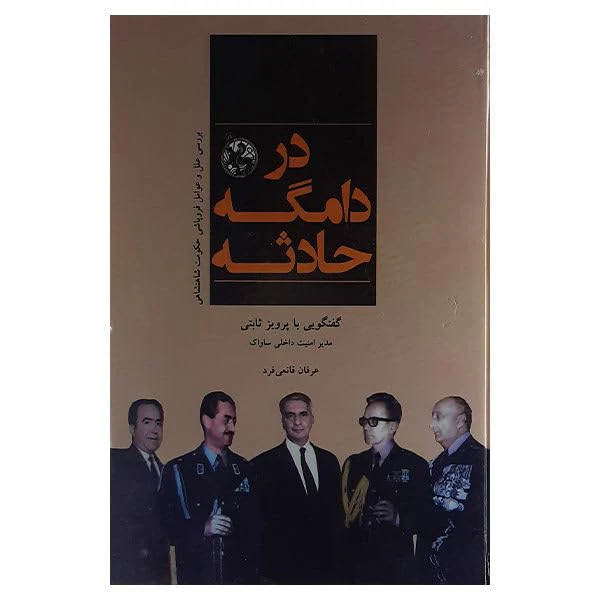
Description
The present book encompasses various legal phenomena pertaining to wealth transfer mortis causa in the world of Roman law. It demonstrates that succession in property rights could be realised by agreements of various kinds, which - though not building a coherent legal concept and being much different from the modern understanding of contractual succession - served as will-substitutes, i.e. functional equivalents to the Roman testament. The study goes back to the ancient sources in order to select and examine any testimonies of agreements aimed at regulating patrimonial relationships after death: agreements having immediate effect between the living, those enforceable only at the death of the deceased, and finally, settlements altering the order of succession mortis causa long after his passing away. It uncovers a series of societal patterns of behaviour staying behind legal institutions. The extent of the already ancient phenomenon of estate planning by agreement and the diversity of the dogmatic issues involved provides a notable starting point for discussions on the contemporary inheritance law dogmas.